
Las Vegas: The Most Affordable Major Rental Market in the Western U.S. | Investor Opportunities

Las Vegas Remains the Most Affordable Major Rental Market in the West

Las Vegas: The Most Affordable Major Rental Market in the Western U.S.
According to a recent RealPage analysis, Las Vegas continues to outshine other Western metros as the most affordable major rental market. Despite steady rent increases over the last decade, the average rent in January 2025 was $1,439, keeping Las Vegas among the nation’s most budget-friendly rental markets.
For real estate investors, this affordability factor creates unique opportunities for value-add investments, consistent rental income, and long-term property appreciation.
Affordability in Context: Las Vegas vs. Other Western Metros
Las Vegas Rents vs. National & Regional Averages:
• Current Average Rent: $1,439
• Historical Comparison:
• Over the past 10 years, Las Vegas rents have averaged $328 lower than the U.S. national average.
• The price gap offers investors potential for higher returns in a value-driven market.
• Regional Affordability:
• San Francisco and San Jose rents exceed $3,000/month, highlighting Las Vegas’ cost-effectiveness.
• Comparable to Jacksonville ($1,436) and Austin ($1,460), both known for population growth and strong rental demand.
Pro Tip:
Investors can capitalize on Las Vegas’ affordability by targeting tenants who are priced out of higher-cost markets like California and Denver.
A Decade of Steady Rent Growth: What It Means for Investors
Las Vegas’ rental market has demonstrated strong rent growth over the past decade, showcasing its potential for long-term income stability.
Market Growth Highlights:
• January 2015: Average rent was $789.
• January 2025: Average rent nearly doubled to $1,439.
• This consistent growth trend underscores Las Vegas’ potential for sustained rental income and capital appreciation.
Long-Term Investment Insight:
• Doubling of rents over 10 years translates to higher rental yields and greater equity gains.
• Investors who entered the market early are now reaping the benefits of significant cash flow improvements.
Investor Implications: How to Leverage Las Vegas’ Affordability
The combination of affordability and steady rental demand positions Las Vegas as a prime market for multifamily investors. However, not all asset classes perform equally well.
Class C Properties: A Strong Performer in a Competitive Market
• Consistent Tenant Demand: Class C properties benefit from steady demand due to their affordability.
• Limited New Competition: Unlike Class A and B markets, there is minimal new supply in the affordable housing segment.
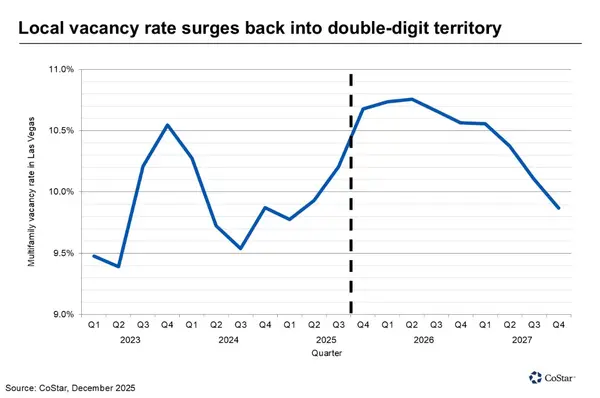
• Higher Occupancy Rates: As vacancies rise in Class A and B properties, Class C assets maintain strong performance.
Strategic Advantage:
Investors can avoid high vacancy risks by focusing on Class C properties, which offer stabilized cash flow and lower turnover rates.
Comparing Las Vegas to Other Western Markets
While Western metros like Phoenix, Salt Lake City, and Denver have experienced volatile rental trends, Las Vegas has maintained a more stable rent growth trajectory.
Key Market Differences:
• Phoenix: Has seen sharp rent fluctuations, impacting investor returns.
• Salt Lake City: Faces rising supply, leading to increased competition and price pressure.
• Denver: High cost of living and rent growth volatility make investment returns less predictable.
Why Las Vegas Stands Out:
• More predictable growth: Las Vegas rents increase steadily, reducing investment risk.
• Affordability advantage: Attracts tenants from higher-cost markets, ensuring strong rental demand.
• Economic drivers: The hospitality, tourism, and business sectors continue to fuel job growth and housing needs.
Investment Strategies for Las Vegas’ Affordable Market
1. Focus on Workforce Housing:
• Target Class C assets: These properties attract long-term renters who seek affordable living options.
• Workforce housing supports tenant stability, leading to consistent income.
2. Explore Value-Add Opportunities:
• Modernize older units: Upgrades can justify rent increases and boost property values.
• Enhancements like energy-efficient appliances, smart home features, and modern amenities increase tenant appeal.
3. Prioritize Stabilized Cash Flow:
• Invest in properties with steady demand, minimizing the impact of market fluctuations.
• Stable cash flow provides financial security, even during economic downturns.
Example Strategy:
An investor purchases a small multifamily property in Henderson, completes minor renovations, and targets workforce tenants. By maintaining competitive rents, the property achieves high occupancy, delivering strong cash flow.
Las Vegas’ Growth Potential: A Market Ready for Expansion
With a lower cost of living than most major metros, Las Vegas is well-positioned for continued population growth and rental demand.
Why Investors Should Act Now:
• Capitalize on affordability: Attract tenants from pricier markets and maintain high occupancy.
• Leverage market stability: Avoid volatility seen in other Western markets.
• Maximize returns: Through value-add projects and long-term investments.
Is Your Portfolio Ready?
Now is the ideal time to evaluate your portfolio and identify opportunities for expansion or repositioning. By staying ahead of market trends, investors can achieve higher returns and build long-term wealth.
Ready to Invest in Las Vegas’ Affordable Rental Market?
If you’re considering expanding your real estate portfolio, now is the perfect time to explore the Las Vegas market. Let’s discuss investment strategies that leverage affordability, maximize rental income, and enhance property value.
Contact Us Today to start building your Las Vegas investments!
FAQs: Investing in Las Vegas’ Affordable Rental Market
1. Why is Las Vegas considered the most affordable major rental market in the West?
With an average rent of $1,439, Las Vegas remains significantly cheaper than Western cities like San Francisco and San Jose, offering high rental demand at lower entry costs.
2. Which property types perform best in Las Vegas’ affordable market?
Class C properties are top performers, benefiting from high demand and limited new supply.
3. How can investors capitalize on Las Vegas’ rent affordability?
• Focus on workforce housing to attract long-term renters.
• Implement value-add strategies to justify rent increases.
• Invest in stabilized cash flow properties for consistent returns.
4. What are the risks of investing in Las Vegas real estate?
While Las Vegas offers strong opportunities, investors should monitor supply trends, evaluate property conditions, and maintain competitive pricing.
Categories
Recent Posts





GET MORE INFORMATION